Dundalk sits on a mix of glacial tills and alluvial silts along the Castletown River. We see this every week in the lab — samples that look fine in the field but fall apart when soaked. The CBR value drops fast once moisture content creeps above optimum. That matters here because the water table is high across much of the town, from the Marshes up towards Blackrock. A CBR road investigation in the field gives us a starting point, but the soaked laboratory CBR is what pavement designers actually need. Without it you are guessing the subgrade strength. We run the test per BS 1377-4:1990, with surcharge weights to match the finished pavement depth. For Dundalk's silty clays, we typically see CBR values between 2% and 5% at equilibrium moisture. That means capping layers are almost always required before you even think about the sub-base. The lab result shapes the entire pavement build-up.
A soaked CBR of 3% on Dundalk till means you need a capping layer — no way around it under TII standards.
Service characteristics in Dundalk
Demonstration video
Critical ground factors in Dundalk
The difference between a site on the north side of Dundalk and one down towards Dundalk Bay is night and day. North of the railway line you hit stiff, sandy till — CBR values can reach 8–12% unsoaked. Head south into the Marshes area and you are dealing with soft silty clay and peat pockets. Soaked CBR down there is often below 2%. That is the risk: assuming a uniform subgrade across the whole town. We have seen jobs where the pavement design was based on one CBR test near the site entrance, and six months later the road over the back corner was cracking. The material changed, and nobody checked. On industrial sites around the IDA park, we always recommend sampling per lot, not per project. The soaked CBR is also your early warning for frost heave susceptibility — if the sample takes on 5% moisture during soaking and swells, that material will move in winter. Dundalk gets enough frost cycles for that to matter.
Our services
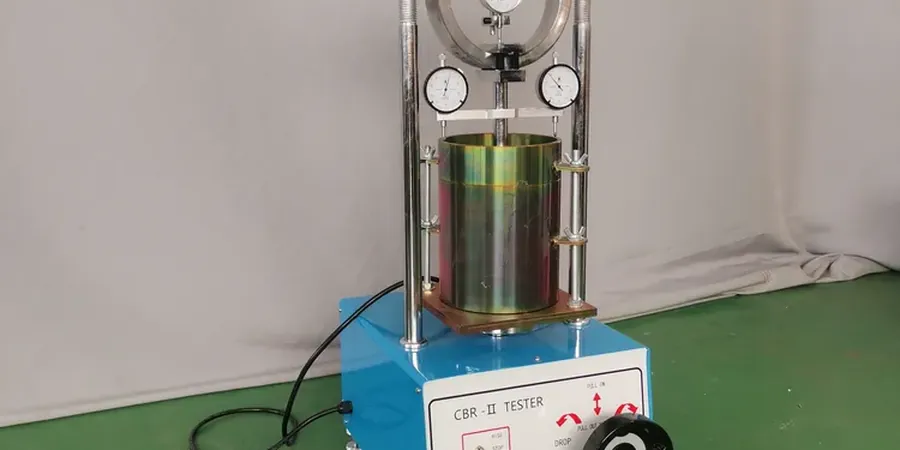
We run the full laboratory CBR programme from our accredited soils lab, handling everything from sample extrusion through to the final report. Turnaround is four to seven working days for standard tests.
Soaked CBR (BS 1377-4)
96-hour soak with surcharge, swell measurement, and force-penetration curve. The standard test for subgrade and capping design per TII specifications.
Unsoaked CBR (immediate)
For granular sub-base and Type 1 materials where saturation is not expected. Tested at as-received moisture content.
CBR with Proctor correlation
We compact companion Proctor specimens alongside the CBR mould to verify density and moisture. Essential for checking site compaction against lab reference.
Multi-point CBR programmes
For variable sites, we run 3–5 CBR tests across different material types. The report includes a subgrade strength map linked to the site plan.
Frequently asked questions
What does a laboratory CBR test cost in Dundalk?
A standard soaked CBR test per BS 1377-4 runs between €100 and €210 depending on whether we prepare the sample from bulk material or receive a pre-compacted mould. Multi-test programmes get a reduced rate per specimen.
How long does the CBR test take from sample to report?
The soaking period alone is 96 hours. Add sample preparation, compaction, and reporting, and the full turnaround is four to seven working days. We can fast-track to three days if the penetration test is run on a Friday and the report written over the weekend.
Do you test the CBR on site or only in the lab?
We run both. The lab CBR gives the soaked design value. For field CBR on compacted layers, we use a dynamic cone penetrometer or plate bearing test. The two datasets feed into the same pavement design calculation.
What CBR value should I expect for Dundalk subgrade?
It varies sharply. On the glacial tills north of town, soaked CBR of 5–8% is common. In the alluvial silts near the Castletown River and the Marshes, expect 2–4%. We always recommend sampling per lot rather than relying on a single figure.